Maps & Flip Flops

The Adventures of Astrid & Cecily


Leave a comment

Touring Tuscany – a soggy start at Monteriggioni

When we decided to hire a driver for the day to tour parts of Tuscany we have to admit we really were at the whim of the driver who selected four stops for us to tour that day. I had forgotten about this stop in my excitement to share our stories of Siena and San Gimignano – perhaps it was because it was the first stop or maybe I was trying to block out the monsoon that began the moment we got out of the van (me. check; Italy. check; downpour, check). Again, have to admit we were still getting a handle on our guides accent and it was early so I am not sure we even knew where we were when he ushered us out of the van and handed us a couple of umbrellas and left us on our own to explore. I honestly wasn’t sure what was going on – or if he’d even be there when we went back to look for our ride.

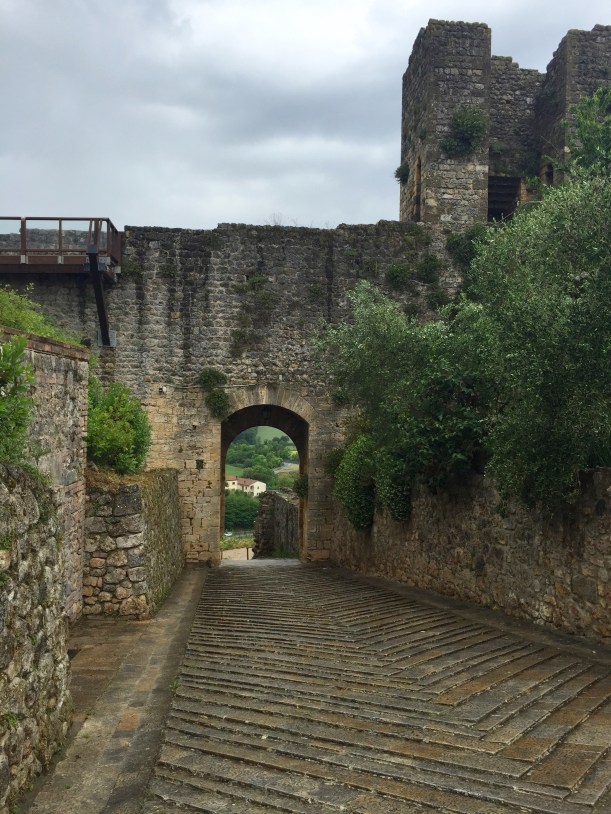
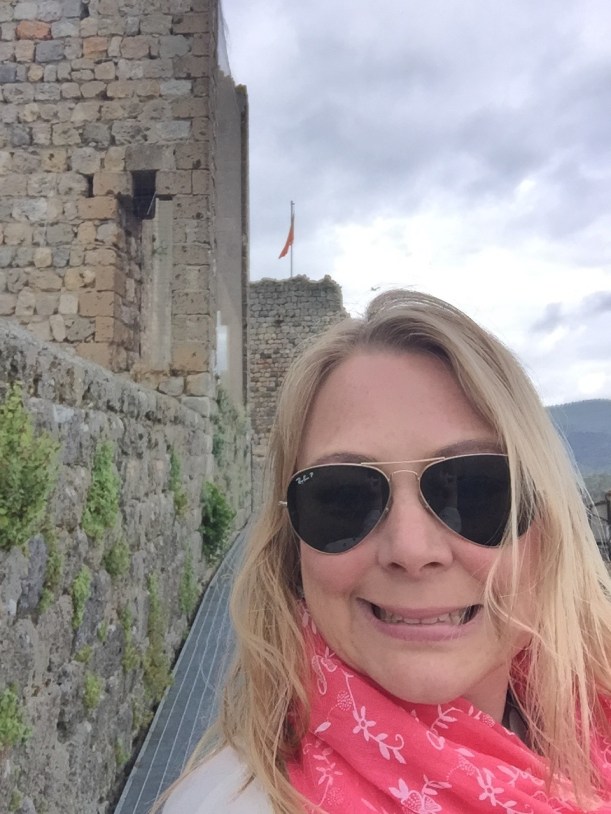
The rain poured as we climbed to the tops of the castle walls and looked out onto the lush green fields and valleys that surrounded us.

One of the first sign we saw on the site explained that Castello di Monteriggioni, which was part of the Via Francine, takes you through from medieval to renaissance times. In the stretch between San Gimignano and Siena, the Via Francigena crossed the territory of Monteriggioni  where one of the ancient pilgrim stopping places still survives, the abbey at Abbadia Isola. The castle was built by the Sienese between 1213 and 1219 for defensive purposes: its strategic location atop a hill overlooking the Cassia Road allowed the castle to control the cities of the Val d’Elsa and Staggia and be on the lookout for any armies approaching Siena.

Discovery Tuscany  filled in what the rest my memory does not recall – or maybe we never really figured out while we were there lost and wandering in the rain – “Monteriggioni represents one of the most important walled castles in the territory. It has incredibly preserved an intact structure as if time had never passed on the hill from which it elegantly dominates the surrounding landscape. Its perfect circular perimeter makes one suppose it to be an artificial construction while in actuality it was created by just following the curves in the natural ground.”
IMG_7406

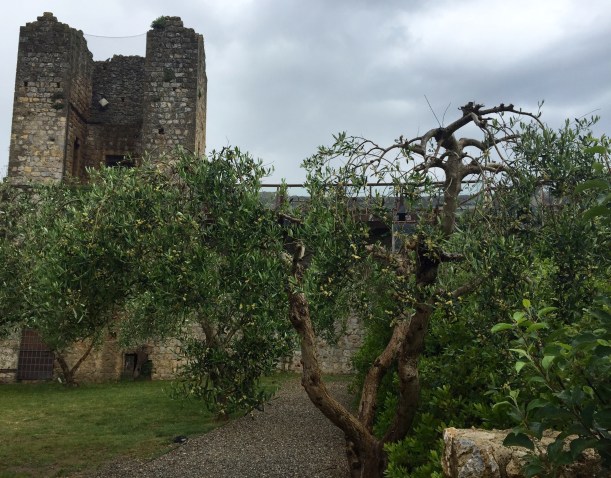
Before the rain…

“The intact fortified wall presents 14 towers along which the guards used to walk and patrol the walls and 2 gates, one called the Franca or Romea Gate which faces Rome and the other known as the Florentine Gate since it heads toward Florence. The current structure of the village is essentially the original one, the only changes it went through date back to the 16th century when the towers were lowered and some earth accumulated at the base of the walls and another dating back to 1921 when 3 of the 14 towers were reduced to the level of the walls.”

IMG_7439

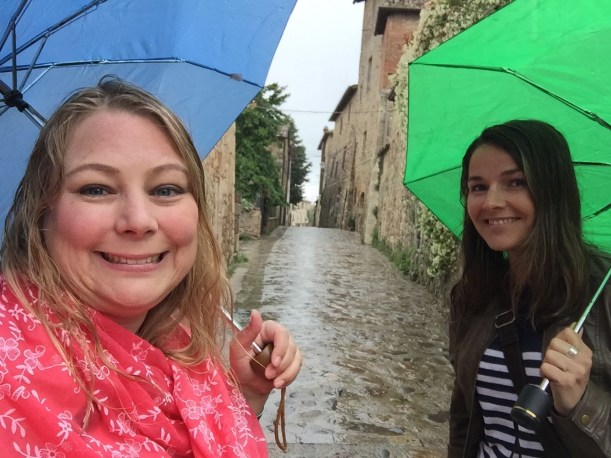
Touring the streets in the downpour with my half-broken loaner umbrella

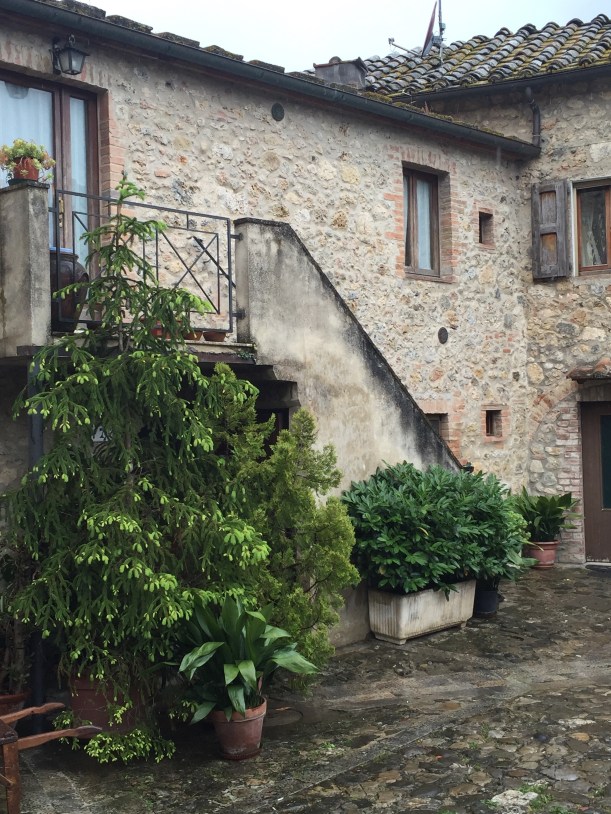
As we sought shelter as the rain got harder, we wound our way through cute little cobblestone side streets, tiny shops and what looked like little apartments in the village.
IMG_7423

A little rain won’t ruin the fun for Maps & Flip Flops…soldiering on with our exploring and hopeful our driver would be there when we were done
 

IMG_7431

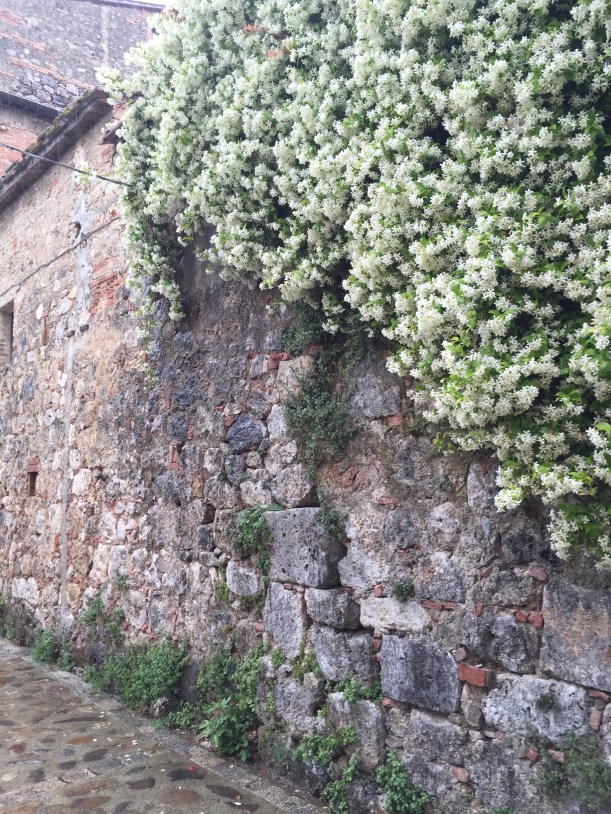
Spring arriving in Tuscany

IMG_7461IMG_7460IMG_7458

Certainly not the best way to start a tour, but I don’t think this is one of those stops that you immediately think of when you make your check-list for Tuscany so we are pretty glad our driver knew it was just the introduction we needed to the story of the medieval times that we we about to experience here and in Siena and San Gimignano later in the day.


Next up?  Finally, Flip Flops is getting into the grappa….and a little Chianti Classico wines.
IMG_7476


Leave a comment

Touring Tuscany – San Gimignano


I have to admit I didn’t really have any expectations San Gimignano but, wow, steeped in history and beautiful old architecture, it was far beyond what one could hope from a small, historical town in Tuscany. The tidbits of trivia I did know were that the city was the birthplace of poet Folgore da San Gimignano and it was the setting for the novel Where Angels Fear to Tread.

DSC02780

Known as the Town of Fine Towers, it is best described as a small medieval hill town, surrounded by three walls. In fact there are eight unique entrances that date back to the 12 and 13th centuries and a dismantled fortress from the 16th century, which sits in ruins. By the time we arrived the weather was not as ‘on our side’ as we had hoped so it was really a race against the clouds to get everything in and learn as much as we could before the downpours. I know, me, Italy and rain, right, Bea K Travels!

DSC02776

According to UNESCO, “the perimeter of the property is defined by two concentric rings of defensive walls. The inner ring was constructed in the late 10th century and in the 13th century it was reinforced with the construction of the outer wall. Inside, the medieval town contains all the elements that contribute to its Outstanding Universal Value: towers and tower houses, noble palaces rich in stone and terracotta decorations, late Roman churches, as well as the urban pattern of streets. Moreover, the urban fabric perfectly combines with a precious system of orchards set along secondary streets and building-free zones, which complement the late medieval urban layout. The unique skyline of the town, loftily perched in a dominant position, can be enjoyed from the main visual cones. Despite social transformation due to development over the last 60 years, the historical centre still retains the same ancient traditions, based on lively social dynamics.” (Source: http://whc.unesco.org/en/list/550)
IMG_7680

The ironwork and horse hitches that dominated Siena continued in this little city. This was a design found on a balcony railing near the centre of the Piazza della Cisterna

According to our friends at wikipedia “San Gimignano is famous for its medieval architecture, unique in the preservation of about a dozen of its tower houses, which, with its hilltop setting and encircling walls form “an unforgettable skyline”.  The Romanesque secular and domestic architecture which may be distinguished from each other by their round and pointed arches, respectively. A particular feature which is typical of the region of Siena is that the arches of openings are depressed, with doorways often having a second low arch set beneath a semi-circular or pointed arch. Both Romanesque and Gothic windows sometimes have a bifurcate form, with two openings divided by a stone mullion under a single arch. Within the walls, the well-preserved buildings include notable examples of both Romanesque and Gothic architecture, with outstanding examples of secular buildings as well as churches. The Palazzo Comunale, the Collegiate Church and Church of Sant’ Agostino contain frescos, including cycles dating from the 14th and 15th centuries. The town also is known for the white wine, Vernaccia di San Gimignano, produced from the ancient variety of Vernaccia grape which is grown on the sandstone hillsides of the area.”
Wikipedia also explains that “at the heart of the town are four squares: the Piazza Duomo, on which stands the Collegiate Church; the Piazza della Cisterna, the Piazza Pecori and the Piazza delle Erbe and 14 preserved towers. To the north of the town is another significant square, Piazza Agostino, on which stands the Church of Sant’ Agostino. The locations of the Collegiate Church and Sant’ Agostino’s and their piazzas effectively divide the town into two regions. These churches house many significant pieces of 14th- and 15th-century renaissance art and impressive frescos everywhere.”
Piazza della Cisterna

“This Piazza is the main square of the town. It is triangular in shape and is surrounded by medieval houses of different dates, among them some fine examples of Romanesque and Gothic palazzos. At the centre of the piazza stands a well which was the main source of water for the town’s residents. The structure dates from 1346.Although much of it has been renewed in the late 20th century, parts of the paving date from the 13th century.” (Source: wikipedia)

Piazza Duomo

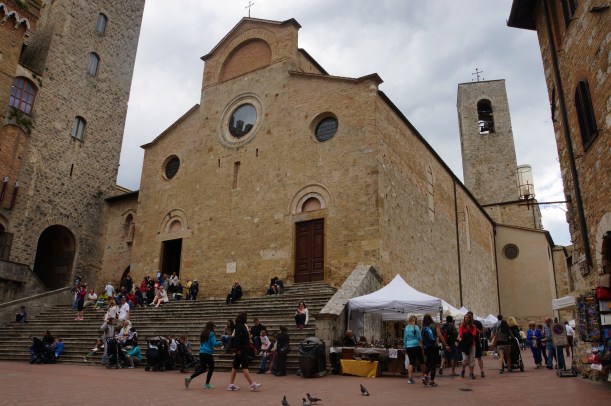
“This piazza is to the north of Piazza della Cistern and is connected by a passage adjacent to an open loggia. To the west, at the top of the square, stands the Collegiate Church, reached by a broad flight of steps. The name of the square would seem to imply that this church was at one time a cathedral, but although it was perhaps planned, this was not the case. Other important buildings on the square include the Palazzo Comunale and the Palazzo Podesta, the house of the mayor. The Palazzo Podesta is distinguished by its huge arched loggia.”

Like many of the smaller, Italian areas we visited, tourism and a desire to modernize continue to make these areas special and important to protect. While Maps could speak to the geology in  a much more informed way than I, our guide also explained to us that the town is prone to landslides and is at risk for seismic activity in this area.

While I don’t think one could spend an entire day here, walking into the city centre is like stepping back in time to the Middle Ages – well, minus all the tourists with their backpacks & selfie sticks – you could see how the aristocratic would have lived in those imposing towers and what a vantage point they had over everything.

But, our day wasn’t done yet – we still had two more stops before our tour of the Tuscan region was complete. Next up, we stop at Castello di Monteriggioni, which was part of the Via Francine, taking you through from medieval to renaissance times.  In the stretch between San Gimignano and Siena, the Via Francigena crossed the territory of Monteriggioni  where one of the ancient pilgrim stopping places still survives, the abbey at Abbadia Isola

Stay with us…


Leave a comment

Touring Tuscany – the wine

As we headed to stop #4 of the day, the weather began to break in our favour which made for a nice ride through Chianti in the afternoon sun. We are still with our driver, careening along at breakneck speed – both in his driving and his explanations of what we are driving past.

DSC02864

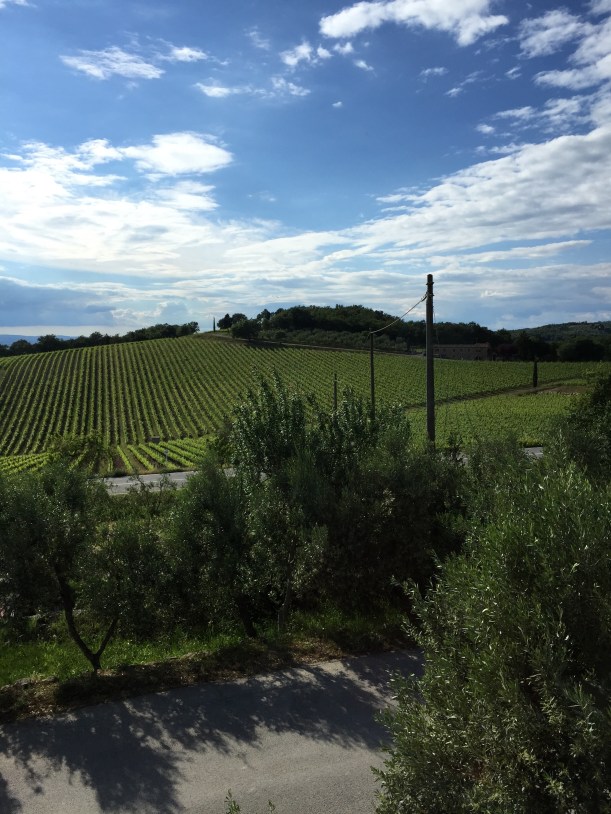
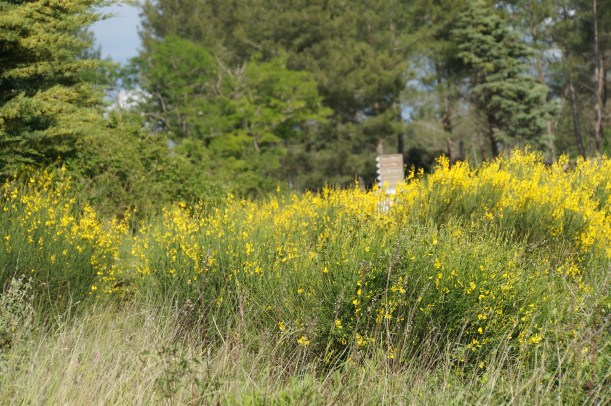
The roadside scenes of spring in Tuscany

DSC02861

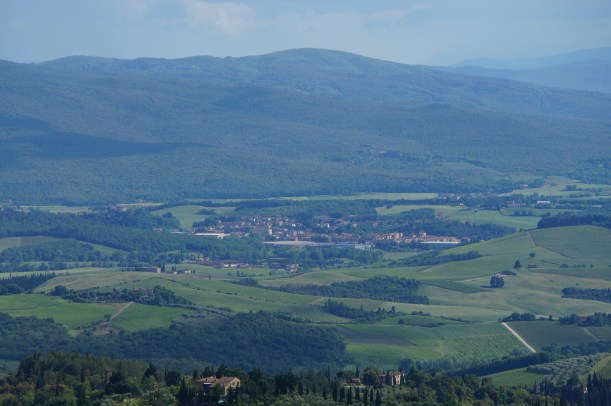
Looking downward into the valley – the greens and blues merging softly together, as we looking down at the village below

DSC02845

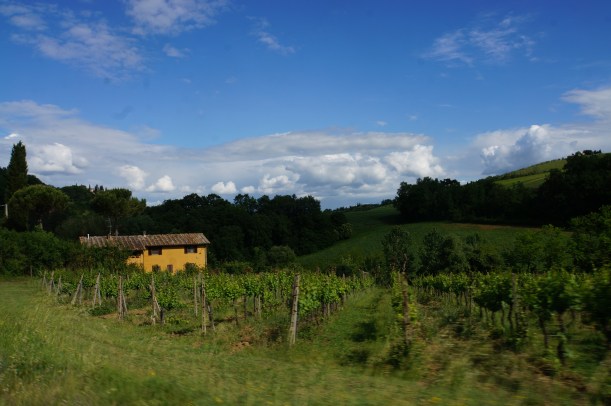
Row by row they grow…

IMG_7696

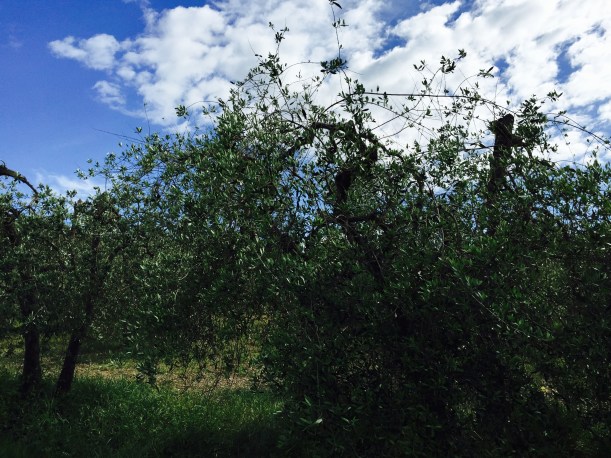
Believe this is an olive grove, though he didn’t slow down enough for our to be sure

There isn’t much history to tell within this part of the trip – but he stopped randomly at some scenic points that are worth sharing.

IMG_7712

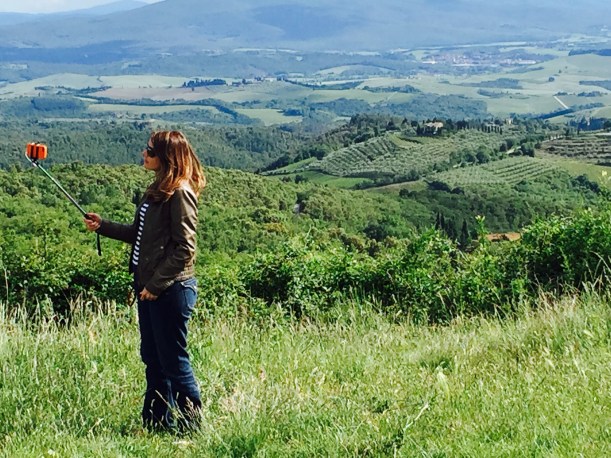
One of my favourite pictures of Maps from the trip – capturing the scene and in complete serenity

When we arrived at the vineyard, in the heart of Chianti Classico zone, the sun was starting to shift in the sky and late day was clearly upon us. Founded in 1973, Rocca delle Macie has an interesting history which is described on their website – “It was established in 1973, when Italo Zingarelli – producer of Ettore Scola’s We All Loved Each Other So Much, and also of the wildly popular series of films featuring comedy duo Bud Spencer and Terence Hill (including They Call Me Trinity and Trinity Is Still My Name) – decided to realize his lifelong dream by acquiring the “Le Macìe” estate – extending across 85 hectares in all, of which only two were under vine.”

DSC02881

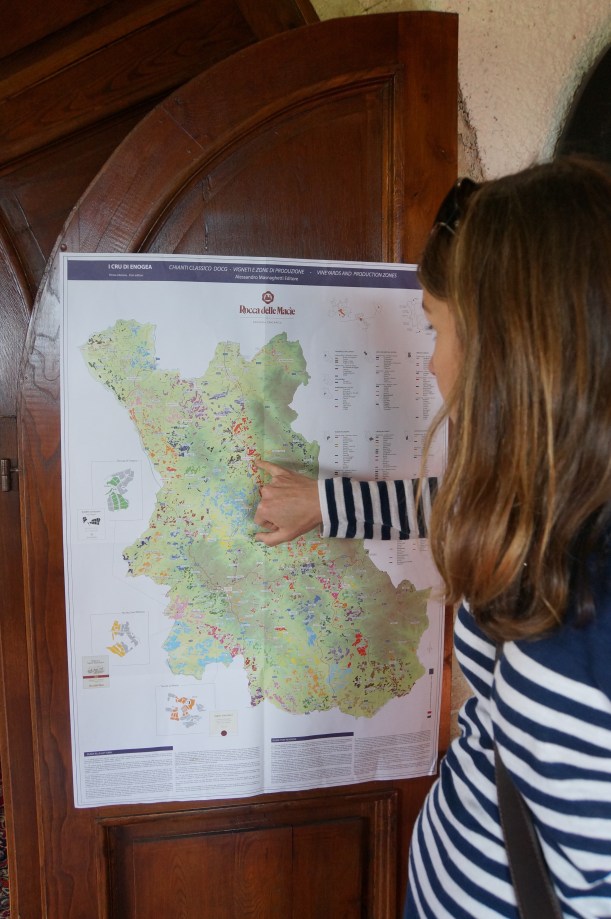
Maps is making sure we know where exactly on the map the Chianti Classico zone extends

DSC02867IMG_7750IMG_7731

“The company estate now extends to more than 600 hectares with, in total, more than 200 used as vineyards and 80 as olive groves, subdivided across the company’s six estates: Le Macìe, Sant’Alfonso, Fizzano e le Tavolelle in the Chianti Classico zone, in addition to the recently purchased Campomaccione and Casamaria in the Morellino di Scansano zone.”

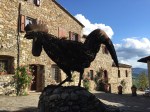
We only had about an hour at this last stop but it was worth doing. Here we saw the trip’s largest black, wrought iron rooster, sampled a large selection of delicious wines from the Chianti Classico region.

IMG_7757

So excited to start tasting…or maybe this was after the grappa #toothygrins

And – in a random call-back to our stop in Chamonix – enjoyed our second encounter with some delicious grappa. While I am now a confirmed fan, it reinforced for Maps that she simply “does not have the constitution”. It was here that we also enjoyed some of the best lavender honey we have ever tasted in our entire life. For Maps, this turned out be an especially effective way to mask the lingering taste of the grappa.

After this lovely and peaceful stop, we hopped back into the van and made our way back to Firenze as the sun faded into twilight and evening set in.

Next up, we pack up our now extremely heavy bags and ride the rails to our final destination of this crazy adventure. All roads lead to Rome…

Stay tuned…