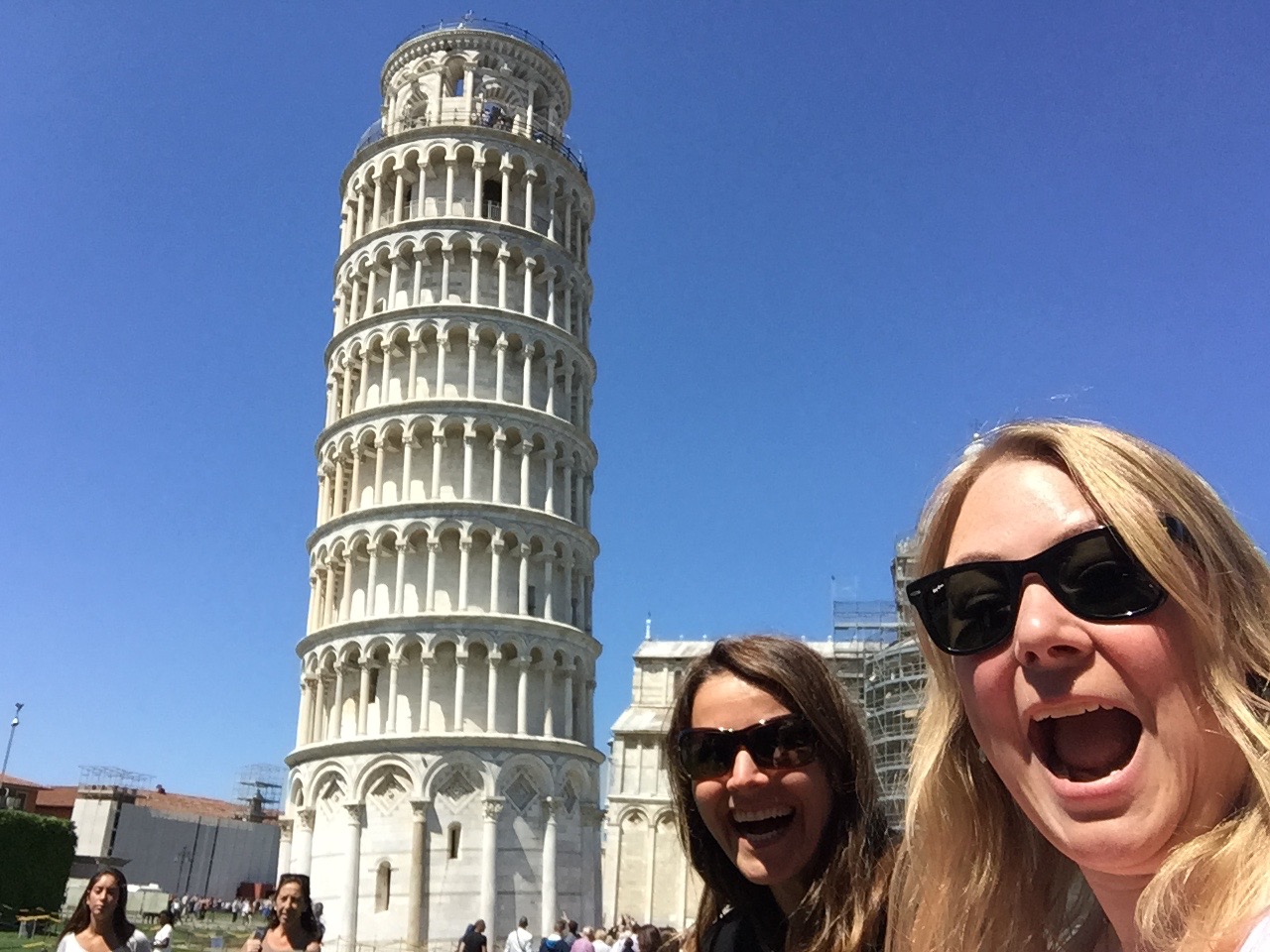
Pisa is a one-hour drive from Florence and a quick hop by train to Pisa Centrale. So we decided to make a quick trip so that Astrid could see this leaning marvel in all its glory.
She can offer some additional details – and video – on the staircase that winds its way to the top & the view from above, as I chose to stay below (with both feet firmly planted on solid ground), scribble out some postcards and people watch in the sun. What she did tell me – upon her return to safe, solid earth – is that as you ascend the staircase what is most interesting is that you don’t feel “on a tilt”.
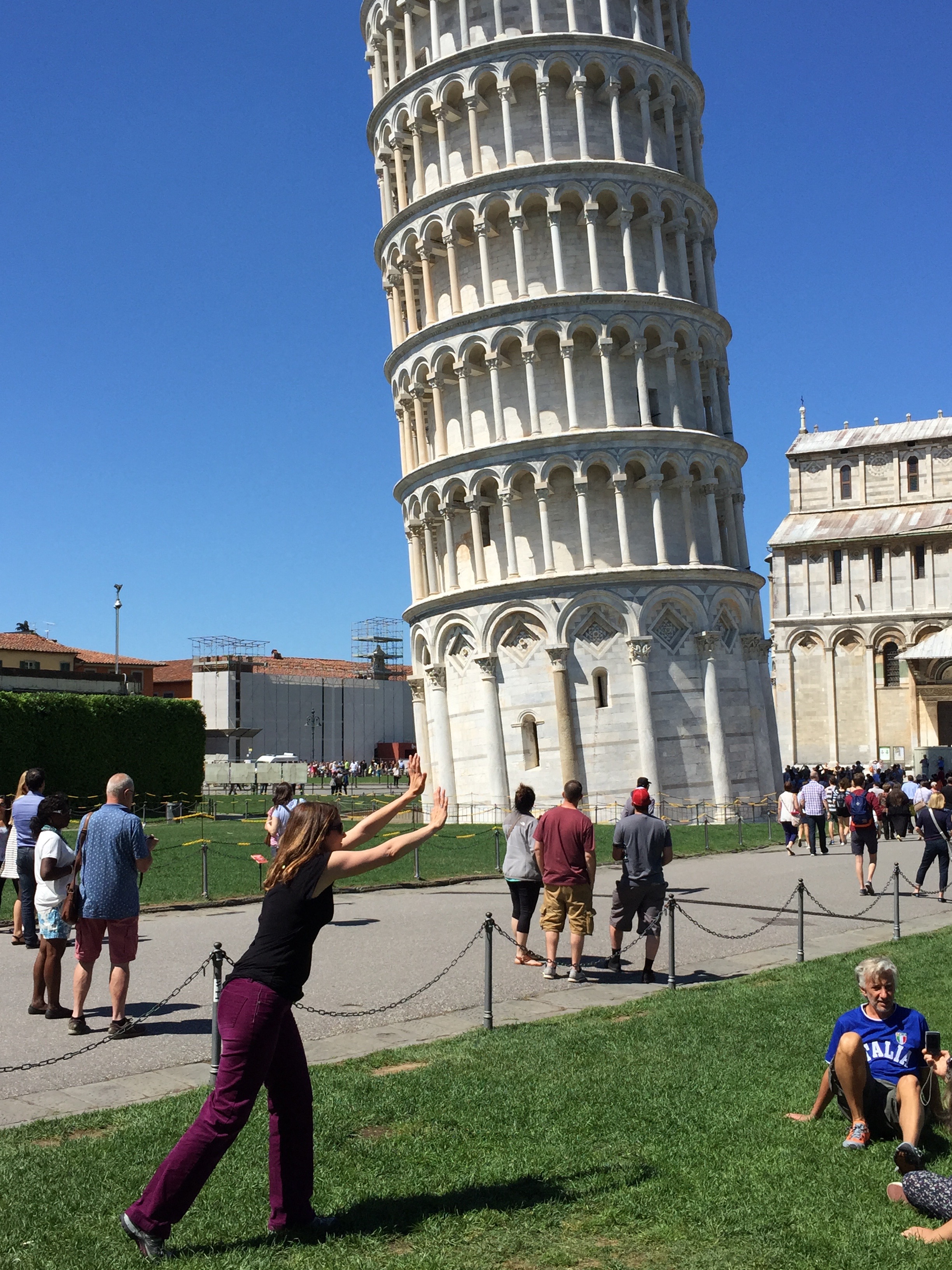
One of the more fun things to watch is all the tourists trying to find a new way to do “this”
Wikipedia explains that “Pisa (pronounced pee-zaah) in Tuscany, on the right bank of the River Arno on the Tyrrhenian Sea. Although Pisa is known worldwide for its leaning tower (the bell tower of the city’s cathedral), the city of over 89,523 residents (around 200,000 with the metropolitan area) contains more than 20 other historic churches, several palaces and various bridges across the River Arno. Much of the city’s architecture was financed from its history as one of the Italian maritime republics.”

Ironically as you try to capture its “lean”, it looks rather straight across the grassy knoll.
The story of how it was built
Begun in 1173, it took over 800 years to complete the tower, made of limestone and lime mortar, and includes a variety of elements in its design such as columns, arch’s and carvings. According to this source, “for medieval Europe, these types of design themes and construction processes were way ahead of their time, resulting in a structure that has remained timeless in appearance through the ages.”
The same source also tells us “The tower was built with limestone and lime mortar, though the exterior of the tower is covered in marble. Ironically, the limestone is probably why the tower has not cracked and broken the rock is flexible enough that it can withstand the pressures placed on it by the lean. It is doubtful that the original architect, Bonanno Pisano, had any idea that the qualities of limestone would play a role in preventing its ultimate collapse.” (Junior geologist tidbit included here!)
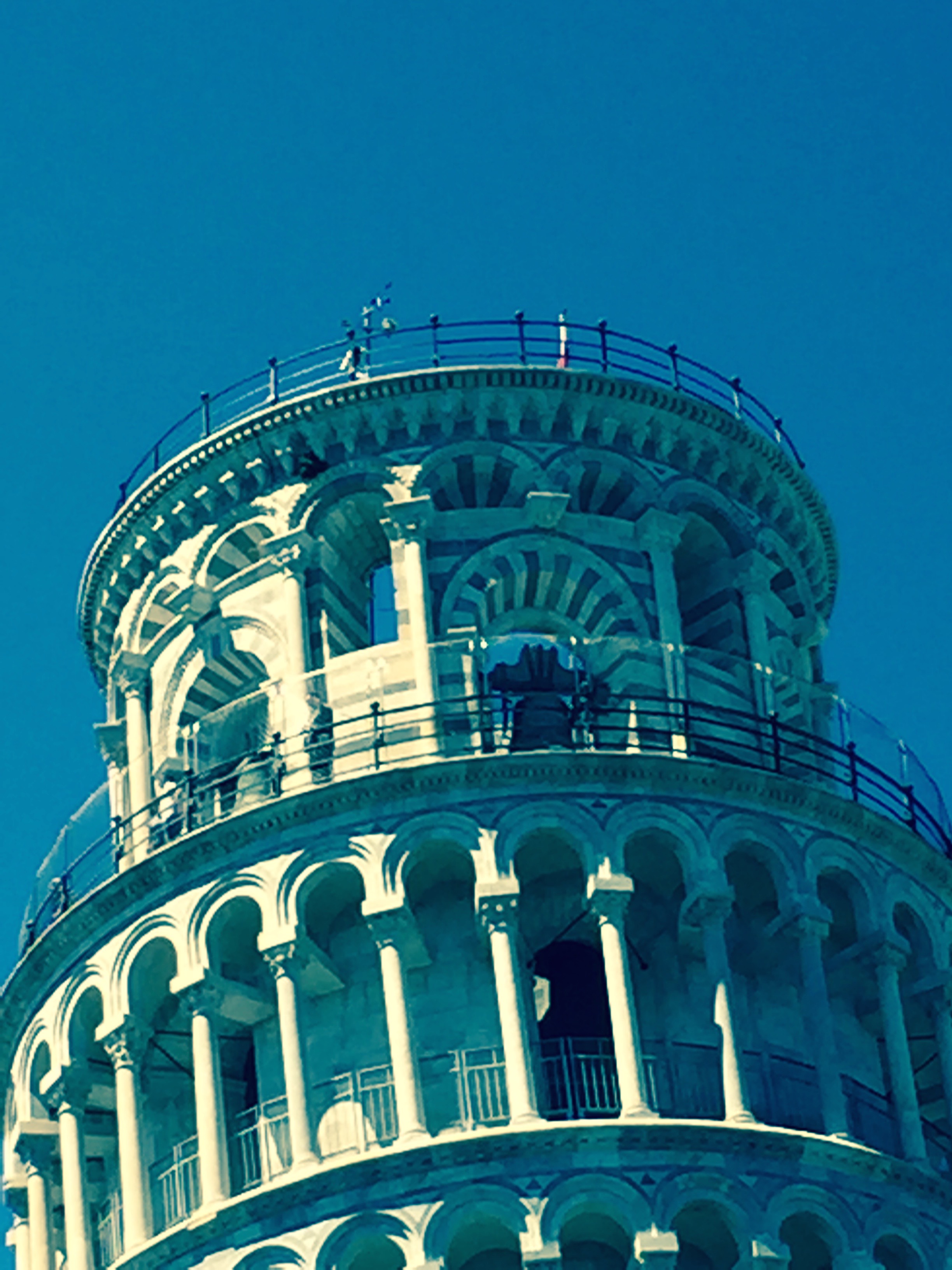
The detail is captured in this close up of the tower. Do you see Astrid waving down at us?
The original plan was that the tower was to be part of a cathedral. Our historical source tells us that ” Five years after the initial construction of two floors it began to lean once the third floor was completed. At the time the cause of the lean was not known, though it was discovered many years later that the lean was the result of the tower being built on a dense clay mixture that was unable to fully support the weight of the tower.”
So construction stopped – for about 100 years – thinking things would settle out and then they’d be able to course-correct the problem. Though, as four more floors were constructed more mistakes were made by the architects and instead of fixing the problem, the tower began to tilt even further.
The last addition was the bell chamber in 1372 and then it sat, as is, until the 19th century. There were further efforts to correct the tilt – one involving the digging of a pathway (spoiler alert: it flooded & tilted further) and then some drilling was done to the foundation and cement was added but guess what happened? Yup, cement created a counter-weight and over she went even further. #timber
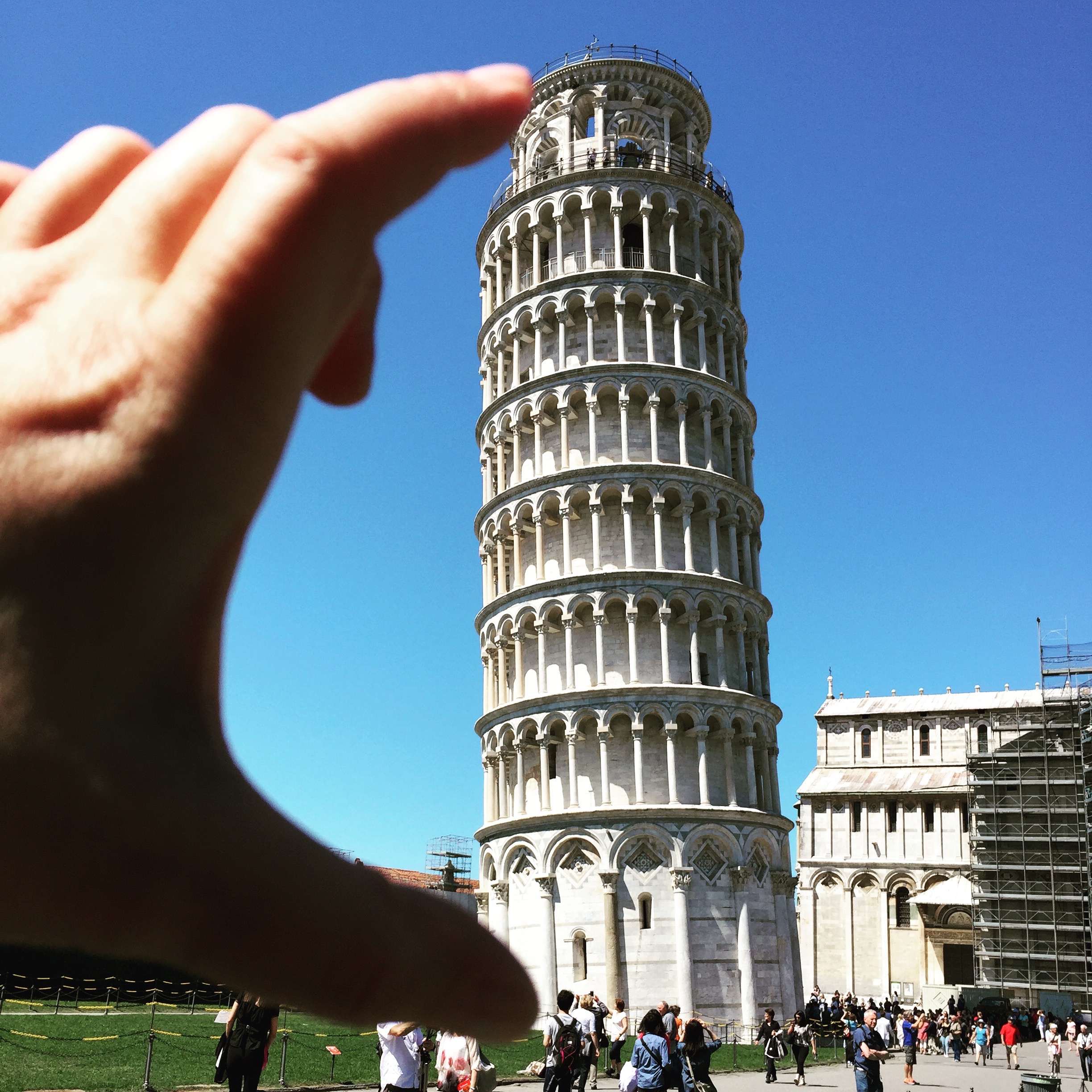
“I’m crushing yer head”. (Canadian KITH fans will know what I mean)
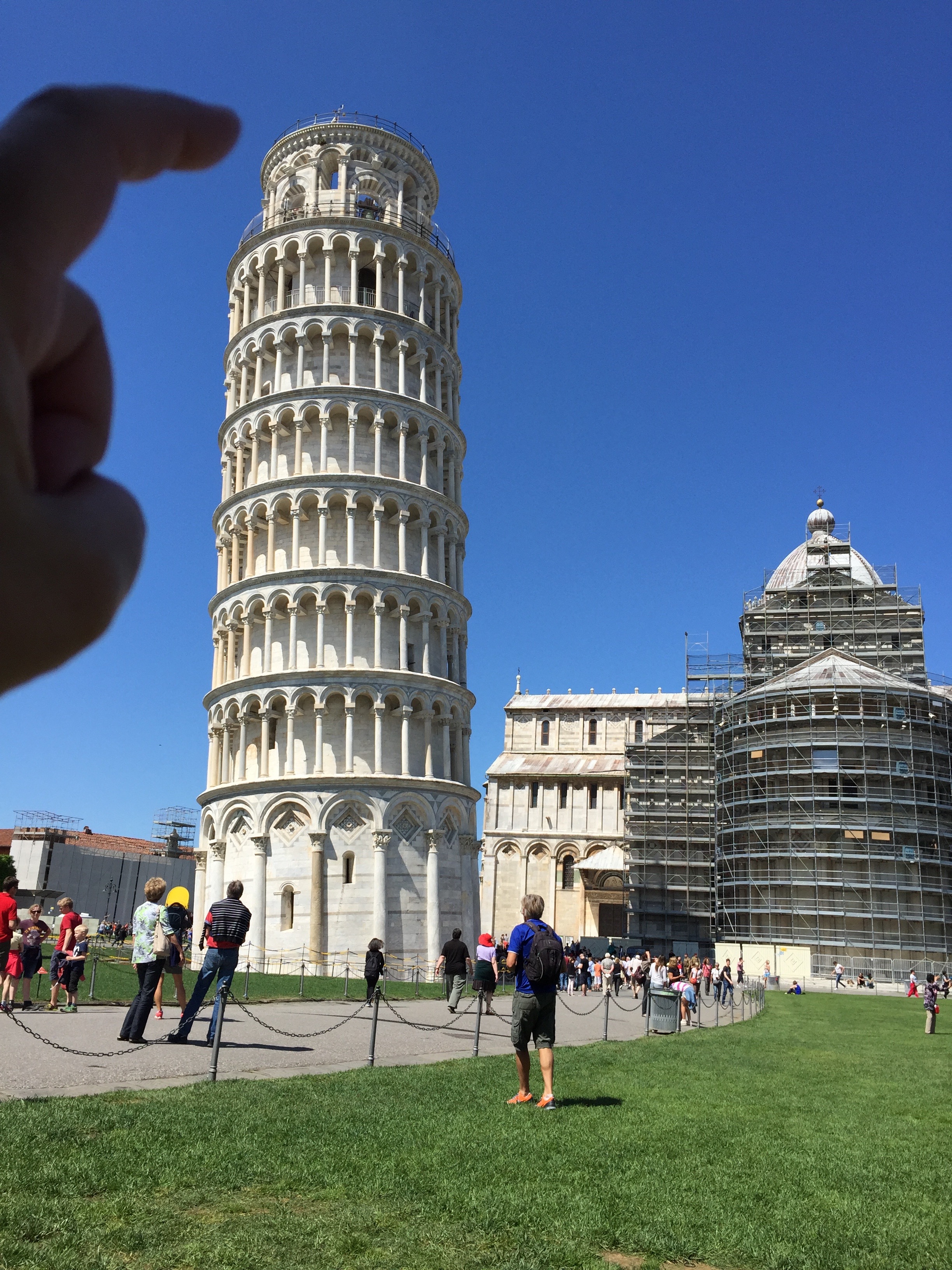
She’s riiighht ‘there’.
In 1990 – around the time grunge took off in Seattle and the millennial generation began its, umm, invasion – the Leaning Tower of Pisa closed for more construction. This means this structure, in some way, shape, or form, has been in a state of “Pardon Our Dust” for about 800 years. Suddenly, that bathroom renovation doesn’t seem so far behind, now does it?
 Maps & Flip Flops